
Buttercream Coloring
Knowledge Hub · Buttercream Coloring

Buttercream takes color more forgivingly than royal icing, but powder needs an extra step, natural pigment needs more volume, and an overpigmented batch has one real fix. Here's how each actually plays out.
Quick answer
Gel is the default for buttercream, the same bottle that works in royal icing and fondant. Powdered color like Master Elite needs to be hydrated first, stirred into a little liquid or melted buttercream, before it folds in evenly. Natural color needs noticeably more product for the same depth and keeps deepening as it sits. And if a batch gets overpigmented, the fix is dilution into fresh buttercream, not an opposite color to try to cancel it out.
Getting powder to actually work in buttercream
Master Elite can be mixed into buttercream, but the powder needs to be activated first, the color crystals need to hydrate before they'll disperse evenly. Stir the powder into a small amount of liquid, or use a portion of your buttercream melted down slightly to give it the moisture it needs, until the crystals break down completely, then fold that into the rest of your buttercream. Powder mixed in straight, without that hydration step, gives noticeably less payoff than a liquid or gel color.
Alternatively, you can skip mixing it in altogether and dust or paint Master Elite onto the outside of finished buttercream instead, that gives full surface coverage and a different, textured look rather than an even overall tint. For a true black on either route, two teaspoons of Master Elite Black per two cups of icing, rested for about an hour, deepens to a true black on its own, trying to reach black by adding more and more color usually gives you a bitter taste instead of a darker shade.
Shop Master Elite
Raw powdered pigment, activated with a little moisture
Highly pigmented dry powder that colors buttercream, royal icing, and fondant alike once hydrated, the choice when a design needs deep, true color without diluting the mix.
Shop the full Master Elite line


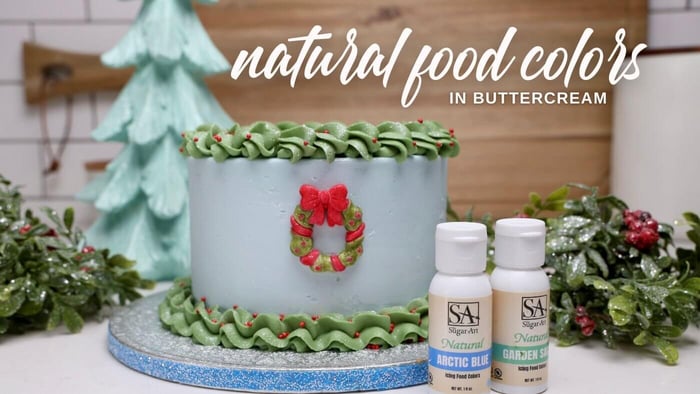
Natural color in buttercream
Compared to a gel, expect to use noticeably more product for the same depth of shade. Natural pigments carry a real, documented weaker payoff than synthetic dyes, so a shade that takes a few drops of gel takes proportionally more of a natural paste or liquid. The color also keeps deepening for a while after you mix it in; natural pigments darken as they dry or sit, so judge the final shade after resting rather than while you're still stirring. Start heavier than you think you need, mix ahead of time if your schedule allows it, and expect the payoff to read softer than a synthetic gel at the same volume.
Fixing frosting with too much color
The easiest fix is dilution: pull some of the overpigmented icing out and blend it into a batch of fresh, untinted buttercream until you reach the tone you want, rather than trying to lighten the original batch in place. Avoid adding an opposite color to try to cancel out the mistake, that usually muddies the shade instead of fixing it. And give it a few minutes before judging whether you've landed on the right tone, color keeps developing after mixing, so what looks right immediately after blending can still shift.
Shop Gel Colors
The default choice for buttercream, in every shade
Concentrated gel, two to three times stronger than liquid, works straight into buttercream with no activation step, mix in gradually and build the shade as you go.
Shop the full gel color line


A few things worth knowing before you start
- ✦ Gel is versatile and works the same way across buttercream, royal icing, and fondant, one bottle covers all three without a separate product for each.
- ✦ Color keeps developing after mixing, sometimes for an hour or more with a deep or powdered shade. Judge the final tone after it rests, not right after mixing.
- ✦ With thirty years of experience, The Sugar Art has a product for every type of icing, from buttercream to royal icing to Swiss meringue.
Frequently asked questions
How do you use powdered food coloring in buttercream?+
Master Elite can be mixed into buttercream, but the powder needs to be activated first, the color crystals need to hydrate before they'll disperse evenly. Stir the powder into a small amount of liquid, or use a portion of your buttercream melted down slightly to give it the moisture it needs, until the crystals break down completely, then fold that into the rest of your buttercream. Powder mixed in straight, without that hydration step, gives noticeably less payoff than a liquid or gel color. Alternatively, you can skip mixing it in altogether and dust or paint Master Elite onto the outside of finished buttercream instead, that gives full surface coverage and a different, textured look rather than an even overall tint.
How intense is natural food coloring in buttercream compared to gel?+
Compared to a gel, expect to use noticeably more product for the same depth of shade. Natural pigments carry a real, documented weaker payoff than synthetic dyes, so a shade that takes a few drops of gel takes proportionally more of a natural paste or liquid. The color also keeps deepening for a while after you mix it in; natural pigments darken as they dry or sit, so judge the final shade after resting rather than while you're still stirring. Start heavier than you think you need, mix ahead of time if your schedule allows it, and expect the payoff to read softer than a synthetic gel at the same volume.
How do you fix frosting with too much gel food coloring?+
The easiest fix is dilution: pull some of the overpigmented icing out and blend it into a batch of fresh, untinted buttercream until you reach the tone you want, rather than trying to lighten the original batch in place. Avoid adding an opposite color to try to cancel out the mistake, that usually muddies the shade instead of fixing it. And give it a few minutes before judging whether you've landed on the right tone, color keeps developing after mixing, so what looks right immediately after blending can still shift.
How do you make black icing?+
Use two teaspoons of Master Elite Black per two cups of icing and let it rest for about an hour. It will deepen to a true black on its own. Trying to reach black by adding more and more color usually gives you a bitter taste instead of a darker shade.
Can you use gel food coloring in place of regular food coloring?+
Yes, and you will need less of it. Gel is far more concentrated than thin supermarket coloring, so start with a small amount and build until you reach the shade you want. Adding gel gradually also protects the consistency of buttercream and royal icing, which thin coloring can loosen.
More from the blog
Real techniques from Ed, straight from the source.
Related guides
Working on a specific application? These connect the technique and color decisions together.